2023 · Times of India · Brand Strategy & Innovations Manager
Erase Valentine’s Day
How 5 Star transformed resistance to Valentine’s Day into a mission to remove it from the calendar
Chapter 01
The occasion every brand wants a piece of
Every February, Valentine’s Day produces an unavoidable wave of advertising.
Brands tell couples how to celebrate, what to buy and how love should look. Singles are offered an equally predictable response: jokes, anti-Valentine’s messages and alternative ways to participate in an occasion they may never have wanted in the first place.
For 5 Star, adding another message to that noise wasn’t enough.
The brand needed to disrupt one of advertising’s most crowded moments while speaking to singles in a way that felt consistent with its irreverent personality.
The opportunity wasn’t to create another version of Valentine’s Day.
It was to question why the day needed to exist at all.
Chapter 02
The real competition wasn’t another chocolate brand
Valentine’s Day is not short of brand participation. The challenge was therefore larger than standing apart from competitors in the category.
We were competing with an entire cultural event: promotions, declarations, memes, gifting guides, couple content and the pressure to participate.
Singles were surrounded by reminders of the occasion - even when those reminders claimed to be created for them.
This led us to a different problem statement:
How could 5 Star give singles a role in disrupting Valentine’s Day instead of merely commenting on it?
The campaign needed to do more than earn a moment of attention. It needed to create a premise people would want to investigate, discuss and actively participate in.
Chapter 03
From an anti-Valentine’s message to an impossible mission
The solution emerged from taking the desired outcome literally.
If singles wanted freedom from Valentine’s Day, what if the brand could erase the day itself?
The international date line gave that provocation a mechanism.
A ship travelling across it at the right moment could symbolically move from 13 February to 15 February - skipping Valentine’s Day in the process.
This became the foundation of the campaign:
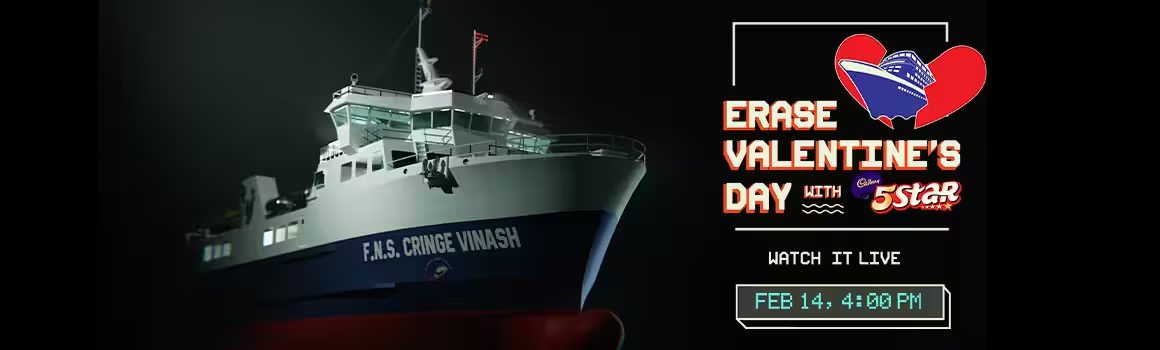
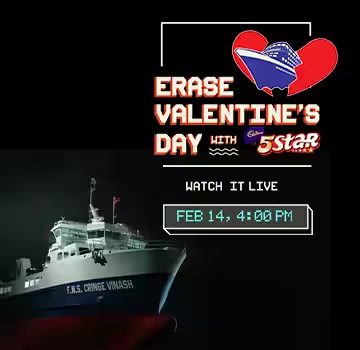
The F.N.S. Cringe Vinash ship would undertake a mission to erase Valentine’s Day.
The idea transformed a familiar anti-Valentine’s sentiment into something larger: part cultural stunt, part fictional mission and part live participatory experience.
Instead of asking the audience to watch another campaign, 5 Star invited them to help make the mission happen.
Chapter 04
Building a world people could enter
A disruptive idea needs more than a launch announcement. It needs enough context for audiences to understand its internal logic and enough intrigue for them to follow the story.
The campaign therefore unfolded as a connected content experience across the Times Internet ecosystem.
Editorial-style articles helped explain the mission and establish its premise. Social content created conversation and anticipation. The campaign destination brought the different elements together and directed audiences towards the live event.
Every touchpoint served a role:
- Discovery
- Social and editorial content introduced the possibility of erasing Valentine’s Day and created curiosity around the mission.
- Context
- Supporting stories explained the ship, the international date line and the logic behind skipping directly from 13 February to 15 February.
- Recruitment
- The audience was invited to join the operation as “Mission Engineers,” giving people a defined role inside the campaign rather than treating them as passive viewers.
- Participation
- The live-streamed virtual event became the campaign’s destination, allowing participants to follow and actively partake in the attempt to erase the day.
- Amplification
- The reach of Times of India’s digital platforms helped the central idea travel through social conversation, content and live participation.
The ecosystem wasn’t simply used for media distribution. It became the storytelling infrastructure through which the mission unfolded.
Chapter 05
Turning audiences into Mission Engineers
The participation mechanic was central to the campaign.
“Mission Engineer” was not simply another name for a viewer. It gave the audience an identity and a reason to become involved. People weren’t being asked to consume branded content about Valentine’s Day; they were being recruited into a shared attempt to destroy its clichés.
That change in language altered the relationship between the campaign and its audience:
From viewers to participants.
From branded content to a live mission.
From reacting to Valentine’s Day to attempting to erase it.
It demonstrated how a strong campaign platform can hold multiple formats together without every piece repeating the same message.